
Why Soft Serve Out-Sells Hard Ice Cream — Every Time
/It's not close. It's not even a competition.
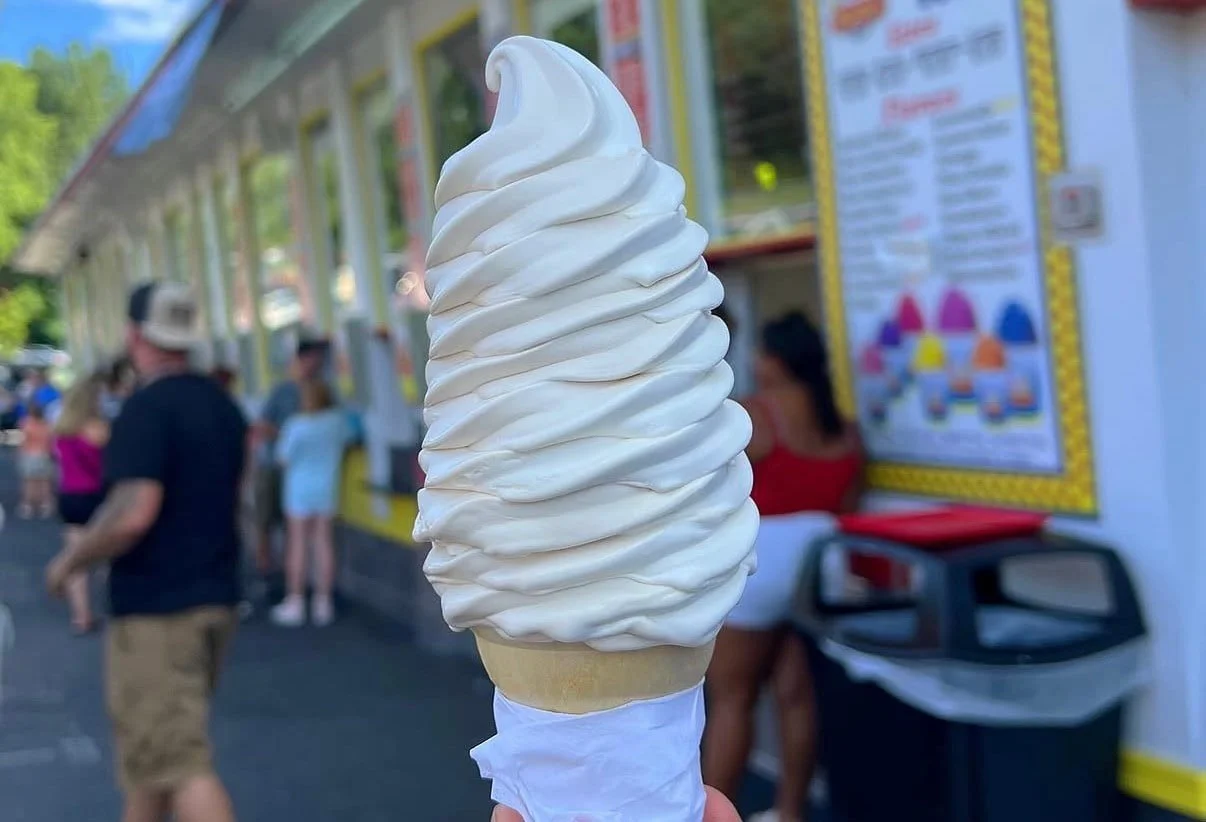
Photo courtesy of Martha's Ice Cream, Lake George, NY — a Taylor-equipped shop and one of the most beloved soft serve destinations in the Adirondacks. Used with permission.
Walk into any busy ice cream shop on a summer afternoon and you'll notice something: the soft serve line moves fast, orders are consistent, and every customer walks away with a perfect swirl. Meanwhile, the hard ice cream case — stocked with a dozen flavors, scooped by hand — takes more time, more labor, and more margin. We've been selling and servicing Taylor soft serve equipment across the Northeast for decades. Here's the real story.
The Texture That Wins Every Time
Soft serve's signature appeal is deceptively simple: it's smooth, creamy, and ready to eat the moment it lands in the cone. No ice crystals. No frozen-solid spoonfuls that require effort to bite through. No waiting for the tub to soften.
That smoothness isn't accidental — it's a function of continuous churning inside the machine, which keeps product at a precise serving temperature while preventing ice crystal formation. Hard ice cream, no matter the quality, cannot replicate what a soft serve machine does at the point of service.
Soft Serve vs. Hard Ice Cream: The Real Cost Breakdown
The business case for soft serve isn't subtle. When you line up every operational cost side by side, hard ice cream carries a burden that compounds quickly — and that burden falls directly on your margins.
Most operators don't think about the dip well when calculating hard ice cream startup costs — but their local health department will. Most codes require a sanitizing dip well or scoop shower to keep scoops clean between uses. It's one more line item, one more compliance headache, on top of an already equipment-heavy setup.
The soft serve machine paid for itself in under two weeks. We had no idea how much we were leaving on the table with the hard ice cream setup until we saw the difference side by side.
The Rarity Effect — It Feels Like a Treat
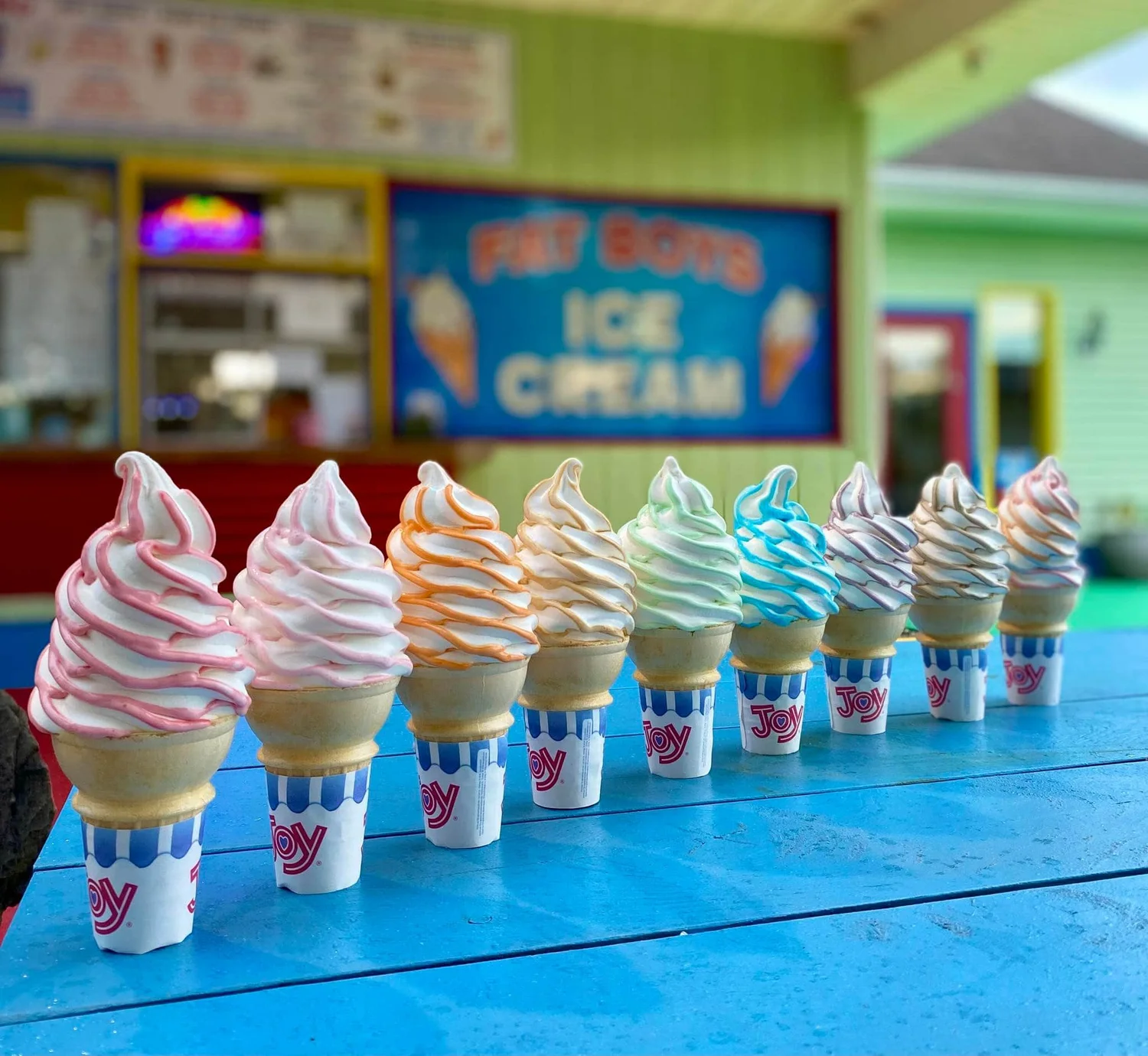
Photo courtesy of Fat Boys Ice Cream, Schenectady, NY — the kind of cone you can't find on a grocery store shelf or order in January. Soft serve is a destination, not a commodity.
Hard ice cream is everywhere. You can buy a pint at the gas station at midnight. It's at every birthday party, every convenience store, every grocery chain. Ubiquity is hard ice cream's strength — and its weakness.
Soft serve, especially across the Northeast, carries genuine scarcity. The shop that opens in late spring and closes in October creates purchasing urgency that no marketing campaign can fully manufacture. Customers don't wander in for soft serve — they make a trip for it. They bring their kids. They post about it. That perception of rarity drives purchasing behavior in a way hard ice cream simply can't compete with from a shelf.
Marketing That Sells Itself
A perfect swirl cone is one of the most photographed foods on social media. Soft serve's visual consistency — that iconic curl at the top, the smooth gradient of a twist — photographs beautifully and reliably, every single time. Hard ice cream, scooped differently with every hand and every order, rarely generates the same organic sharing.
Operators who lean into soft serve's visual identity — dipped cones, unique toppings, seasonal flavor colorways, layered cups — build social media presence almost passively. Every customer becomes free marketing the moment they point a phone at the counter.
Our guests aren't just ordering them — they're sending photos to their friends while still at the table. The machine is the best marketing tool we've ever invested in.
Add promotional tactics — "buy one, get one" during shoulder-season months, seasonal limited flavors that create urgency, a collaboration with a local bakery for a limited-time run — and you have a complete marketing engine built around a product that was already selling itself.
Six Reasons Soft Serve Wins
Smooth, creamy, no ice crystals, consistent temperature every single time. Hard ice cream can't replicate what happens at the moment of service from a well-maintained machine.
A dual-hopper machine plus a FlavorBurst system can rotate through dozens of flavors on demand — strawberry, mango, matcha, ube, cookies 'n cream — with no extra tubs, no waste, no swapping.
Lower butterfat, lower ingredient cost, lower labor per serving, one machine instead of a full dipping setup. Every serving costs less to produce and takes less time to deliver.
Seasonal soft serve shops create urgency that grocery store freezer aisles can never manufacture. Customers make a trip for soft serve. They don't make a trip for a pint of hard ice cream.
A Taylor soft serve machine can serve hundreds of cones per hour at identical weight, texture, and temperature. Hard ice cream scooping is inconsistent by definition — and it slows down in a rush.
The swirl is built for the feed. Every Instagram post and TikTok from a customer is a free ad reaching their entire network. Hard ice cream in a cup doesn't generate that. Soft serve does, every time.
Hard ice cream isn't going anywhere — it has its place. But when you look at the cost, the operations, the marketing, and the customer behavior, the story is consistent. Soft serve out-sells hard ice cream because it out-operates it.
Ready to explore what a soft serve program looks like for your operation — or does your current machine need service, parts, or an upgrade?
