Introduction: Why the Right Ice Cream Machine Changes Everything
If you run a restaurant, food truck, ice cream shop, convenience store, campground, or catering business in Upstate New York, you already know that desserts drive profit. But not all desserts are created equal. Soft serve ice cream is consistently one of the highest-margin menu items in the foodservice industry — with profit margins exceeding 85% per serving when the right equipment is matched to the right operation.
The problem is that choosing the wrong commercial soft serve machine is a surprisingly costly mistake. An underpowered soft ice cream machine creates bottlenecks during peak hours. An oversized floor model in a small cafe wastes energy and money. Buying off the open market without an authorized dealer relationship means no service guarantee, no genuine parts, and no support when something goes wrong at noon on a Saturday in July.
This guide is written by Taylor Upstate — Upstate New York's only authorized Taylor distributor, with 44 years of experience placing and servicing soft serve equipment across the region. We have helped hundreds of businesses, from single-location ice cream shops in the Adirondacks to multi-unit restaurant groups in Syracuse and Albany, find the right machine for their operation.
By the time you finish reading, you will know exactly what questions to ask, what specifications matter for your business type, and how to avoid the most common and expensive mistakes buyers make when investing in a commercial ice cream machine.
Who this guide is for:
- Ice cream shops and frozen dessert parlors in Upstate New York
- Restaurants, cafes, and diners looking to add soft serve or frozen yogurt
- Food trucks and catering companies needing compact, mobile equipment
- Campgrounds and seasonal venues investing in a profit-generating machine
- Convenience stores, delis, and grocery stores adding a service counter
- First-time buyers comparing new vs. certified pre-owned ice cream machines
Start With Your Business Type
Before you look at a single machine spec, get clear on your business category. The volume, footprint, and feature requirements for a food truck are completely different from those of a high-volume ice cream parlor. Here is how to think about it by business type.
Ice Cream Shops and Frozen Dessert Parlors
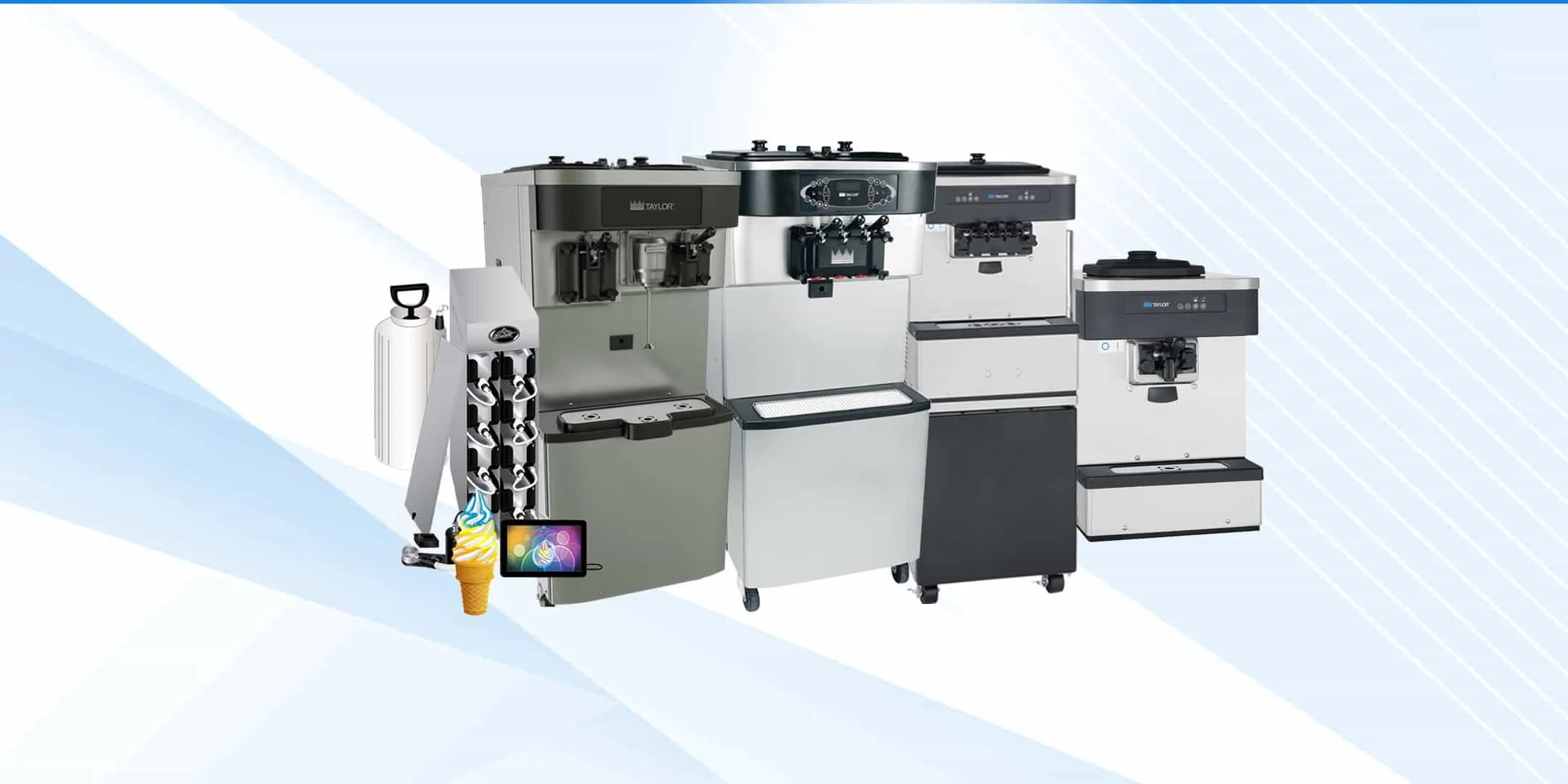
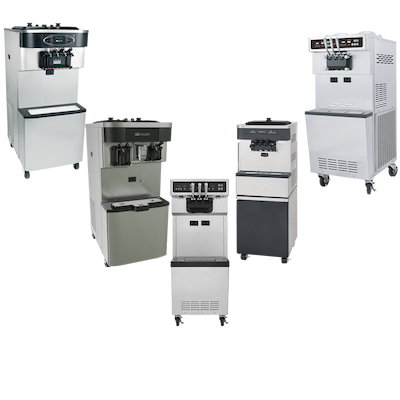
These are the highest-volume operations. You are likely running the machine continuously during business hours, serving a line of customers with little downtime between orders. For this environment, you need a floor model soft serve machine with a high-capacity hopper (20 to 40 quarts), a twin-twist or multi-flavor configuration, and heat treatment capability so your cleaning schedule does not require daily teardown. Taylor's 8756, C712, C716 and C722 floor models are the most popular choices for dedicated ice cream shops in our territory.
Restaurants, Cafes, and Diners
For a restaurant adding soft serve as a dessert option, volume is moderate and space is often limited. A countertop ice cream machine is typically the right call — specifically a countertop model capable of 2 to 3 servings per minute. You want reliability, ease of cleaning for staff who are not ice cream specialists, and low noise output so it does not disrupt the dining room. The Taylor C161 and Icetro ISI163 countertop model with optional cart is ideal for this segment.
Food Trucks and Catering Operations
Mobility and power requirements are everything here. You need a compact, countertop soft ice cream machine that fits within your truck's footprint, works within your available electrical capacity (most food trucks run 240V single phase), and can handle a rush without overheating. Air-cooled countertop models are almost always the right choice for food trucks.
Campgrounds and Seasonal Venues
Seasonal businesses have a different calculus. You need a machine that is easy to winterize and store, simple enough for seasonal staff to operate and clean, and durable enough to resume full operation each spring without issues. Certified pre-owned Taylor equipment is often the best value for campgrounds — lower upfront cost with the same reliability as new, backed by our 365-day parts and labor warranty.
Convenience Stores and Delis
Self-serve automatic dispensing capability like the Icetro ISI-271THSN and ISI-271SHSN, low labor requirements, and consistent product quality are the priorities. Countertop soft serve machines with heat treatment allow you to leave the machine running through the week without daily cleaning — critical for a store where dedicated equipment staff is not realistic. Profit per serving is exceptional compared to packaged frozen desserts.
The Two Key Numbers — Space and Volume
Every buying decision for a commercial soft serve machine comes down to two measurements: how much space you have, and how many servings you need to produce per hour at peak. Get these two numbers right and the rest of the decision becomes much simpler.
Measuring Your Available Space
Countertop soft serve machines are typically 17 to 22 inches wide, 26 to 32 inches deep, and 28 to 36 inches tall without a cart. Floor models run significantly larger — 22 to 28 inches wide and 60 to 70 inches tall. Before you fall in love with a specific model, tape out the footprint on your counter or floor and confirm you have adequate clearance — particularly on the sides and rear for air-cooled units, which need 6 to 12 inches of ventilation space.
Estimating Your Peak Volume
A standard 4-ounce cone takes roughly 4 to 5 seconds to dispense. A countertop machine can produce about 2 to 3 servings per minute. At a 2-hour peak rush, that is 240 to 360 servings from a countertop unit. Floor models can sustain higher continuous output and recover faster between pulls — important for an ice cream shop serving a line 75 people deep on a summer Saturday.
Rule of thumb: If your peak hour demand exceeds 200 servings, start looking at floor models. If it is under 150, a countertop machine will serve you well.
Hopper Size and Refill Frequency
The hopper holds your unfrozen mix. Countertop machines typically hold 4 to 8 quarts. Floor models hold 20 to 40 quarts. If you are running a busy summer operation and refilling a countertop hopper every 20 minutes, you are pulling staff away from service. Larger hoppers reduce that burden — but they also mean more mix sitting at refrigeration temperature, which has food safety implications if you are not monitoring temperatures carefully.
Single Flavor, Twin Twist, or Multi-Flavor?
This is the question that most directly shapes your menu and your revenue per machine. Here is a clear breakdown of each configuration.
Single Flavor Soft Serve Machines
A single flavor soft ice cream machine serves one product from one spout — typically vanilla, chocolate, or a custom flavor. They are simpler to operate, easier to clean, and less expensive than multi-flavor units. For businesses where the menu focus is narrow — a specific custard flavor, a branded frozen yogurt, or a single-item soft serve concept — a single flavor machine is the right call.
Twin Twist Machines
The twin twist soft serve machine is the most popular configuration in commercial foodservice. It holds two separate flavors — typically vanilla and chocolate — and dispenses each individually or as a swirled combination from a third spout. This gives you three products from a single unit. For most restaurants, diners, food trucks, and mid-volume ice cream shops, the twin twist is the optimal choice.
Multi-Flavor Systems: The Flavor Burst Add-On
If you want to offer 8 to 16 flavors from a single soft serve machine, the Flavor Burst system is a game-changer. It attaches directly to your existing Taylor freezer spout and injects concentrated flavored syrup into the product as it is dispensed. The system uses a 10-inch color touchscreen and concentrated 1-gallon syrup bags that do not require refrigeration. This is an exceptional upsell tool for high-traffic venues where flavor variety drives repeat business.
| Configuration | Best For | Flavors Available | Relative Cost |
|---|---|---|---|
| Single Flavor | Focused concepts, custard shops, frozen yogurt | 1 | $ |
| Twin Twist | Most restaurants, food trucks, ice cream shops | 3 (vanilla, chocolate, twist) | $$ |
| Flavor Burst Add-On | High-traffic venues, amusement parks, campgrounds | 8–16+ | $$ + add-on |
Air-Cooled vs. Water-Cooled
Every commercial soft serve machine generates heat as part of the refrigeration process. Air-cooled and water-cooled systems handle this differently, and the choice has a real impact on your operating costs, installation requirements, and product consistency.
Air-Cooled Soft Serve Machines
Air-cooled machines push hot air out through vents on the sides or rear of the unit. They are easier and less expensive to install because they require no water line or drain connection. The key requirement is adequate clearance: 6 to 12 inches on sides and rear. Running an air-cooled machine in a tight, poorly ventilated space will reduce efficiency, shorten compressor life, and affect product quality.
Water-Cooled Soft Serve Machines
Water-cooled machines circulate water through a condenser to remove heat. They are quieter, more energy-efficient, and produce more consistent product temperatures — particularly important in hot environments or a kitchen that runs very warm. For most Upstate New York indoor locations — ice cream shops, restaurants, convenience stores — water-cooled is the standard choice. They require a cold water supply line and a drain. If you are operating outdoors, or if you have two or more soft serve machines in one location, water-cooled is worth the additional installation investment.
Gravity Feed vs. Pump Mix Systems
This is a technical distinction that affects both the product you serve and the economics of your operation. Understanding it will help you squeeze more profit from every gallon of mix.
Gravity Mix Systems
In a gravity-fed soft serve machine, the mix flows from the hopper into the freezing cylinder by gravity. Gravity systems are simpler to operate, easier to clean, and require less maintenance. They produce a denser product with lower overrun. If you are serving a premium, dense product — a rich custard or high-butterfat soft serve — a gravity system often produces the preferred texture.
Pump Mix Systems
A pump mix system uses a pump to push mix from the hopper into the freezing cylinder under pressure, incorporating more air in the process. Higher overrun means more servings per gallon of mix — which translates directly to more profit per gallon. For high-volume commercial operations, pump mix systems are the preferred choice because the increased overrun meaningfully lowers your cost per serving.
The practical answer: If you are focused on no butterfat products like yogurt, sorbet, Dole Whip and lower volume, gravity is the right call. If you are focused on maximizing profit per gallon of mix at high volume, pump is the better choice.
New vs. Certified Pre-Owned
One of the most common questions we get from first-time buyers is whether to purchase a new machine or a certified pre-owned unit. The honest answer depends entirely on your situation.
When New Makes Sense
A new Taylor soft serve machine is the right choice for flagship locations, high-volume operations running 12 or more hours per day, and owners who want the full manufacturer warranty from day one. New machines come with a 5-year warranty on refrigeration components, 2 years on electrical motors and beater drive gear units, and 2 years on universal controls and labor. Every new machine from Taylor Upstate includes delivery, installation, training, cleaning supplies, preventive maintenance supplies, and advertising materials.
When Certified Pre-Owned Makes Sense
Taylor Upstate's Certified Pre-Owned program means every machine has passed a 50-point inspection, been reconditioned exclusively with Taylor Genuine Parts, and been tested by our EPA-certified master technicians. With it comes a full 365-day parts and labor warranty. Certified pre-owned is the smart choice for seasonal businesses, campgrounds, first-time operators managing startup cash flow, and businesses opening a second location.
What to Avoid: Buying Used on the Open Market
Used soft serve machines sold on eBay, Facebook Marketplace, through restaurant liquidators or the infamous knock-off companies pretending to be affiliated with Taylor. None of these machines come with no inspection history, no genuine parts guarantee, and no "Taylor" warranty. A machine that looks operational may have worn seals, a compromised compressor, or outdated electrical controls that fail within weeks. The cost savings evaporate quickly when you factor in emergency service calls, parts, and downtime during peak season.
Total Cost of Ownership — Beyond the Sticker Price
The purchase price of a commercial ice cream machine is only the beginning. Smart buyers evaluate the full cost of ownership across 5 to 10 years.
Energy Costs
Commercial soft serve machines are among the more energy-intensive pieces of foodservice equipment. Taylor machines are engineered for efficiency, but the difference between an air-cooled and water-cooled unit in your specific environment can affect your utility bill meaningfully over time.
Parts and Maintenance
Taylor Genuine Parts are manufactured to the same tolerances as original equipment — they fit correctly, last longer, and do not void your warranty. Aftermarket parts are cheaper upfront but frequently cause premature failures and can void manufacturer coverage. Taylor Upstate maintains the largest genuine parts inventory in the Upstate NY region, with most orders going out same-day.
Service Response and Downtime
Taylor Upstate's factory-trained, EPA-certified technicians are GPS-dispatched across Upstate New York, with most service visits occurring within 24 hours of a call. Our technicians carry a full mobile parts department in their vehicles, meaning most repairs are completed on the first visit. A machine down on a Friday afternoon in July during peak season is not a small inconvenience — it is lost revenue of hundreds of dollars per hour.
What Is Included When You Buy From Taylor Upstate
- Delivery to your location anywhere in Upstate New York
- Professional installation and setup
- On-site employee training
- Full 2 year manufacturer warranty (5 years on refrigeration, 2 years on electrical and controls)
- Cleaning supplies and preventive maintenance supplies
- Advertising and menu materials
- 24/7 support and over 95 years of combined team experience
- Assistance with opening day operations
- Menu development, profit and food cost guidance, and pricing strategy
Choosing the Right Soft Serve Mix
Your soft serve machine is only as good as the mix you put in it. Mix formulation — the balance of butterfat, sweeteners, emulsifiers, and stabilizers — directly affects texture, flavor, draw consistency, and overrun.
Understanding Butterfat Percentages
A typical New York State ice cream shop uses a 10% butterfat mix for soft serve and up to 16% for hard-dipped ice cream. Higher butterfat produces a richer, creamier product but costs more per gallon. Your Taylor Upstate representative will help you match the right mix to your machine model and your menu concept.
Liquid vs. Powder Mix
Liquid dairy mixes from local New York dairies are the gold standard for most operations — fresh, consistent, and optimized for Taylor equipment. Powdered mixes reconstituted with water are a practical alternative for campgrounds, remote locations, and seasonal venues where dairy delivery logistics are complicated. Taylor Upstate has developed alliances with dairy mix suppliers across New York State and will connect you with the right local supplier for your area.
Heat Treatment — The Feature That Changes Your Cleaning Schedule
Heat treatment is an automatic pasteurization cycle built into select Taylor soft serve machines. When activated, the machine heats the product in the freezing cylinder to a temperature that eliminates bacterial growth, then cools it back down to serving temperature — all automatically, without operator intervention.
The Labor Impact
Without heat treatment, a soft serve machine serving dairy product must be disassembled, cleaned, sanitized, and reassembled daily — a process that takes 30 to 45 minutes and requires trained staff. With heat treatment, that disassembly and cleaning is required only once every 28 days. For a 7-day-a-week operation, that is 27 days of saved labor per month.
New York State Food Safety Compliance
Taylor's heat treatment system is designed to comply with New York State Department of Agriculture and Markets dairy sanitation requirements. Our team is deeply familiar with NYS requirements and will ensure your equipment is configured for full compliance.
Ten Questions to Ask Before You Buy
- How many servings per hour do I need at peak? (Calculate: estimated peak hour customers x average servings per customer)
- Do I have the correct electrical capacity? (Most Taylor commercial machines require 208-230V, single or three phase — confirm with your electrician before purchasing)
- Air-cooled or water-cooled — do I have the ventilation space or the water line access?
- Single flavor, twin twist, or multi-flavor? (What does my menu concept actually call for?)
- Countertop or floor model? (Does my volume and footprint math point to countertop or floor?)
- New machine or Taylor Certified Pre-Owned? (What is my true budget, and what does my volume justify?)
- What is my cleaning labor tolerance? (Do I need heat treatment capability?)
- Am I in a mobile environment? (Food truck or catering — does mobility change my cooling type requirements?)
- Purchase or lease? (Taylor Upstate can discuss lease options — for seasonal businesses especially, this changes the cash flow picture significantly)
- Who will service the machine locally? (Is there an authorized Taylor dealer with factory-trained technicians who can reach me within 24 hours?)
A note on question 10: Taylor Upstate is the only authorized Taylor distributor serving all of Upstate New York. Our factory-trained technicians are dispatched across the region and typically arrive within 24 hours of a service call. We carry genuine Taylor parts on every service vehicle. This is not a detail — it is the difference between a 24-hour fix and a week of downtime waiting for a part to ship from across the country.
